
In today’s digital-first world, mobile app development is no longer just about building an app—it’s about creating intelligent, personalized, and scalable digital experiences. As we move into 2026, one major force is reshaping the industry: Artificial Intelligence (AI).
From predictive recommendations to real-time chat support, AI-powered mobile apps are transforming how businesses engage with customers and how users interact with technology.
In this article, let’s explore:
- What AI-powered mobile app development really means
- Key trends shaping the future
- Business benefits of AI integration
- Essential tools and technologies
- Why professionals must adapt now
📱 What Is AI-Powered Mobile App Development?
AI-powered mobile app development refers to integrating artificial intelligence technologies—such as machine learning, natural language processing, computer vision, and predictive analytics—into mobile applications to enhance functionality and user experience.
Instead of static features, AI-driven apps can:
- Learn from user behavior
- Predict user needs
- Personalize content
- Automate decision-making
- Improve performance over time
Popular platforms like Instagram, TikTok, and Netflix use AI algorithms to recommend content based on user interaction patterns. This is no longer a luxury feature—it is becoming a standard expectation.
🔥 Top AI Trends in Mobile App Development for 2026
1️⃣ Hyper-Personalization
Users expect apps to understand their preferences. AI enables real-time data analysis to deliver:
- Personalized product recommendations
- Customized notifications
- Location-based services
- Dynamic UI adjustments
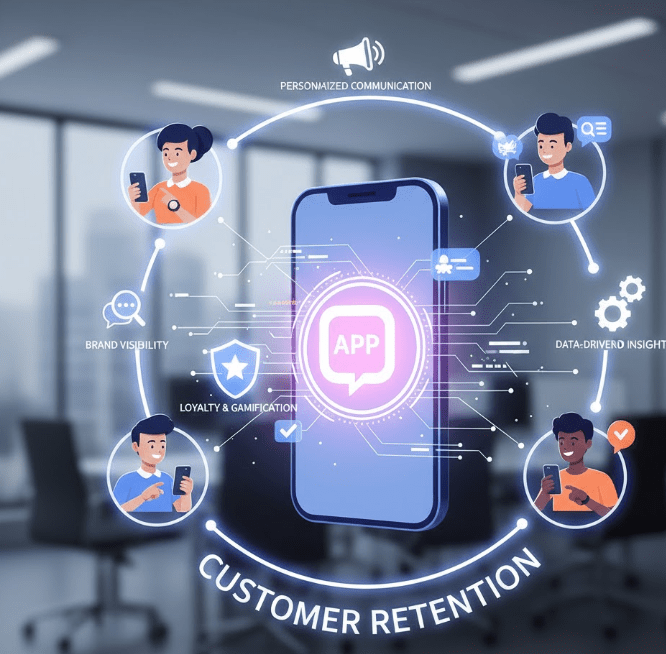
This improves customer satisfaction and significantly increases user retention rates.
2️⃣ AI Chatbots and Virtual Assistants
Modern mobile applications integrate AI chatbots to provide 24/7 customer support. These bots use natural language processing (NLP) to understand and respond to user queries intelligently.
Benefits include:
- Reduced operational costs
- Faster response times
- Improved customer experience
- Automated workflows
Businesses that adopt AI chatbots gain a competitive advantage by offering seamless digital support.
3️⃣ Predictive Analytics for Better Decision-Making
AI analyzes large datasets to predict user behavior. For example:
- E-commerce apps predict what users might purchase next
- Fitness apps suggest personalized workout plans
- Financial apps detect suspicious transactions
Predictive analytics increases engagement and reduces churn by anticipating user needs.
4️⃣ AI-Driven Security Enhancements
With increasing cyber threats, AI improves mobile app security through:
- Biometric authentication (face recognition, fingerprint)
- Fraud detection algorithms
- Anomaly detection systems
Security is a major ranking factor in app store optimization (ASO) and user trust.
5️⃣ AI in UX/UI Optimization
Artificial intelligence is now being used to analyze user interaction data and optimize user interface design automatically.
AI tools can:
- Identify usability issues
- Suggest layout improvements
- Optimize navigation flows
- Reduce friction in conversion funnels
This improves both user satisfaction and business performance.
💼 Business Impact of AI in Mobile Apps
AI-powered mobile app development is not just a technical upgrade—it is a strategic business decision.
Here’s how it creates measurable impact:
✅ Increased Customer Engagement
Personalized content and recommendations keep users active longer.
✅ Higher Conversion Rates
Predictive targeting improves marketing efficiency.
✅ Cost Reduction
Automation reduces customer service and operational costs.
✅ Data-Driven Strategy
Businesses can make informed decisions based on real-time analytics.
✅ Competitive Advantage
AI integration differentiates brands in crowded app marketplaces.
Organizations that adopt AI early will dominate their industry in the next decade.
🛠 Essential Tools & Technologies for AI Mobile Development
If you are planning to integrate AI into mobile apps, here are some essential technologies:
- Machine Learning Frameworks: TensorFlow Lite, Core ML
- Chatbot Platforms: Dialogflow
- Cloud Services: AWS AI services, Google Cloud AI
- Data Analytics Tools: Firebase Analytics
- Cross-Platform Frameworks: Flutter, React Native
Developers must continuously upgrade their skills to stay relevant in this rapidly evolving field.
🌍 Opportunities in Emerging Markets
In developing countries and emerging tech ecosystems, AI-powered mobile apps present massive opportunities.
Startups can:
- Build AI-based healthcare apps
- Create smart financial inclusion solutions
- Develop AI-driven education platforms
- Design agriculture optimization apps
🚀 The Future Outlook
By 2030, most successful mobile applications will be AI-driven at their core. Features like:
- Real-time voice interaction
- Emotion recognition
- Context-aware recommendations
- Fully automated customer journeys
will become standard expectations.
Professionals in tech, project management, and digital strategy must understand AI integration—not just coding but also its business implications.
The future of mobile app development lies at the intersection of:
Technology + Data + User Experience + Strategy

🎯 Final Thoughts
AI-powered mobile app development is not a trend—it is the future.
Businesses that embrace artificial intelligence today will lead tomorrow’s digital economy. Developers who learn AI integration will stay competitive. Leaders who understand AI strategy will drive innovation.
The question is no longer:
“Should we integrate AI into our mobile app?”
The real question is:
“How fast can we adapt?”


Leave a Reply